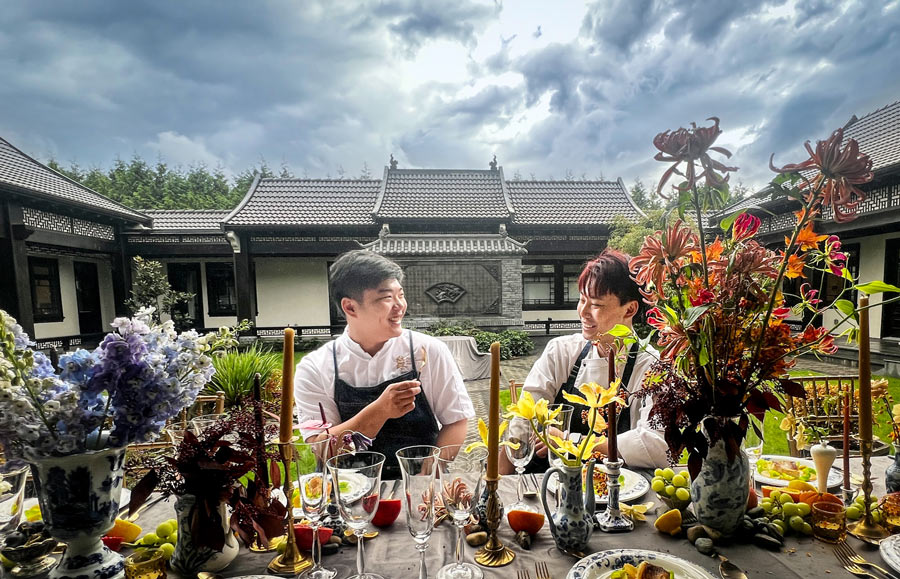
Ming Yeung, executive chef at Bamboo Grove in Richmond, agrees: “I think, we are in Vancouver, very close to Alberta. We source Canada products first for our dishes. We do have to update classic dishes with Canadian ingredients and modify or keep the flavour or do it even better.”
Lau and Yeung are just two of the chefs participating in a new festival, the Signature Dish Dining Festival, which runs from Nov. 1 to 18 in 18 Chinese restaurants throughout Vancouver, Richmond and Burnaby. It’s a prelude to the Chinese Restaurant Awards, to be announced on Jan. 17, 2012, but it’s also much more than that.
For the first time, this festival celebrates the chefs, who traditionally remain anonymous, while the owner or manager is the public face of a Chinese restaurant. These chefs are proudly front and centre, smiling, welcoming, their crisp white jackets gleaming and adorned with medals and awards.
“The chefs were very excited about the whole opportunity,” says Craig Stowe, founding director of the Chinese Restaurant Awards and the force behind the new festival. “We really focused on their pride and challenged them to come up with something spectacular.”
Moreover, the festival focuses on the way Chinese traditionally like to dine.
Unlike western diners, who may choose a restaurant by its ambience, Chinese diners pick a restaurant because they like a particular, signature dish — say, the king crab in curry sauce at one place or the seafood congee at another.
But perhaps most importantly, this festival celebrates the ingredients, chief among them Alberta beef and Alberta pork, thanks to an initiative by the Alberta Livestock and Meat Agency.
“Alberta decided to come on board because it’s a high quality market for a high quality product,” says Norm Janssen, a senior development officer at Alberta Agriculture and Rural Development.
Beef is something of a luxury ingredient in Chinese cooking, but pork is an absolute essential. It’s used in soups, sauces, noodles, dumplings, stir-fries, sausages, appetizers, side dishes and main courses. It’s also nutritious, versatile and delicious.
“We use almost every part of the pork for Chinese cooking,” Bamboo Grove’s Yeung says.
Adds Henry Ng, executive chef at Northern Delicacy, a Shanghainese restaurant in Richmond, “Pork has the charm for us to create various dishes, combining it with other ingredients and even alone.”
Where western chefs would often choose the high end chops and roasts, Chinese chefs prefer the more flavourful but less expensive cuts, such as spare ribs and pork cheek. The latter is especially popular because of its springy texture and delicate flavour that’s versatile in stir-fries.
Other standout pork dishes in the festival include Northern Delicacy’s steamed pork brisket, a golden pillow of silky sweet fat and tender salty meat, and The Jade Seafood Restaurant’s pork fillet with mushrooms and basil, a complex banquet of mushroomy umami and aromatic herbal flavours.
Jade’s executive chef Tony Luk, the CRA’s 2011 chef of the year, enjoyed how Alberta pork’s quality allowed him to be more creative and update classic dishes.
“We have to explore ingredients most of the time,” Luk says. “Local ingredients are always fresh, with promising quality.”
“Fresh, fresh, fresh is what it’s all about in Vancouver’s Chinese restaurants,” says Stowe, who’s noticed that customers are increasingly asking for local ingredients and demanding to know the food’s provenance.
This is increasingly the case in the city’s Asian eateries, especially now that Canada has received China’s Approved Destination Status and affluent Chinese visitors are flocking here just to dine.
“They’ve heard about the super-clean process meat and seafood goes through in Canada and they’re here to try it. Food and travel are completely connected,” Stowe says.
Of course, local residents are also demanding what’s fresh, local and high quality.
“We have a large demand for local ingredients as they are easier to be sourced and the quality is guaranteed,” says Fraser Court’s Lau. “There is more consistency of quality and flavour of the dishes.”
And if the chefs have their way, Alberta pork will continue to appear on their tables long after the festival is over.
If you go:
The Signature Dish Dining Festival runs to Nov. 18, featuring 18 Chinese restaurants in Richmond, Vancouver and Burnaby, B.C.
Each restaurant offers set menus for four, six or 10 people, with prices of $100, $150 and $300 (tax, drinks and gratuities not included). Reservations recommended; mention that you plan to take part in the festival. For more info, visit chinesediningguide.com.
Baked Sliced Alberta Pork Fillet with Herb & Mushrooms
This striking and subtly flavourful dish is prepared by the 2011 CRA Chef of the Year Tony Luk at The Jade Seafood Restaurant in Richmond. You’ll need to start making the sauce a day before you prepare this dish.
lb (250 g) Alberta pork tenderloin
1 tsp (5 mL) potato starch
1 tsp (5 mL) sea salt
6 slices Portobello mushroom
butter as needed
Yunnan Wild Morel Mushroom Sauce (see recipe below)
6 slices cucumber
6 fresh basil leaves
Wash the Alberta pork tenderloin and slice crosswise into 6 fillets. Toss with a bit of potato starch and sea salt and allow to marinate for 2 hours.
Preheat oven to 200°F (100°C).
Wash the Portobello mushrooms, trim any especially dark gills, then cut the caps into about the same size slices as the pork.
Put Alberta pork fillets into a baking dish and cover with the Yunnan Wild Morel Mushroom Sauce. Put the fillets into the oven and bake for 20 minutes.
Meanwhile, heat a wok or large skillet on medium heat, then add a small knob of butter. Pan-fry the Portobello mushroom slices till half cooked, then remove from heat and sprinkle with sea salt.
On a serving plate, arrange the cucumber slices, then top each first with a slice of Portobello mushroom, then a pork fillet and finally a basil leaf. Use a toothpick to sandwich each stack. Serves 6.
Chef Tony Luk’s Yunnan Wild Morel Mushroom Sauce
If you can’t find the dried mushrooms at your local gourmet grocery story, order them through ponderosa-mushrooms.com. Mirin and yakiniku sauces are available at Asian markets; so is chicken powder, a savoury base frequently used in Asian cooking for soups, sauces and seasonings.
3 oz (90 g) dried morel mushroom
3 oz (90 g) dried porcini mushrooms
5 oz (140 g) red onions, minced
butter as needed
2 cups (500 mL) water
1 tsp (5 mL) Ebara Yakiniku no Tare sauce or to taste
2 tsp (10 mL) Japanese mirin sauce
1 tsp (5 mL) brandy
2 tsp (10 mL) chicken powder
Soak the dried morel mushroom and the dried porcini separately in water for 24 hours. The next day, wash well and pour out the water. Mince the morel mushroom and the dried porcini separately.
Use a blender to blend the morel mushroom and dried porcini into very small pieces.
Heat a pot over medium heat, then add a generous knob of butter and let it melt completely. Add red onion and mushrooms, then stir-fry.
Add water, yakiniku sauce, mirin, brandy and chicken powder. Simmer for 15 minutes, then remove from heat. Serves 6.
Alberta Pork Spare Ribs in Sweet Vinegar Sauce
This deceptively simple dish by executive chef Ming Yeung at Richmond’s Bamboo Grove Restaurant has surprising depths of flavour.
8 Alberta pork spare ribs
1 tsp (5 mL) white sugar
2 tsp (10 mL) brown sugar
1 tsp (5 mL) chicken powder
1 tsp (5 mL) apple cider (non-alcoholic)
6 tsp (30 mL) Chinese black vinegar
cup (100 mL) water
vegetable oil as needed
Wash the Alberta pork spare ribs, pat dry, then toss with white sugar and allow to marinate for 2 hours.
Mix brown sugar, chicken powder, apple cider, Chinese black vinegar and water together to create sauce. Set aside.
Heat a large skillet or wok over medium heat and add a little bit of vegetable oil. Pan-fry the pork spare ribs until they are half cooked. Add the sauce and stir-fry at medium heat for another 10 minutes.
Serves 8.